This post was originally published on this site

Banele Ginidza
The National Energy Regulator of South Africa (Nersa) has expressed confidence in its decision to grant trading licences to private electricity operators, despite Eskom’s legal challenge.
Eskom contends that Nersa violated its own regulations by issuing these licences without the proper industry rules, potentially jeopardising the integrity of the electricity supply chain.
At the core of the dispute is Eskom’s frustration over licensing that permits private operators to trade electricity, diverging from the traditional path of virtual wheeling agreements.
The challenge suggests a fear that these new entrants might cherry-pick the best-paying customers, leaving Eskom burdened with slower-paying clients.
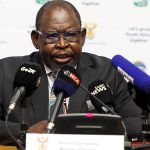
Nersa chairperson Thembani Bukula on Tuesday said the dispute Eskom had with the traders revolved around certain areas that traders will take the best paying customers and leave the utility with slow payers.
“That dispute is one we will still see ventilated in court, if it comes to that. But the Electricity Regulation Act is very clear, you have to have a licence if you are going generate transmit, distribute, trade import and export,” Bukula said.
“That is what is being applied right now, but we have not seen the papers, we have heard they will bring the case’ around that but as we speak they are already upto 10 traders in this country doing the wheeling.”
He said Nersa still awaited Eskom’s virtual wheeling pilot results from which the regulator would assess and make determination of whether its proper or not.
“There were issues around who collects the money and whether there is line of sight between offtaker and generator and those issues have not been finalised,” he said.
Bukula said with curtailment rules having been approved last month, Eskom can use curtailment as an ancillary service and that the amount is in the existing Multi-Year Price Determination (MYPD) and the percentage to be applied would be determined as the process unfolds.
Curtailment is expected to harness an additional 3 000MW and the process was expected to solidify over the next three years of the MYPD.
Meanwhile, Electricity and Energy Minister Kgosientso Ramokgopa said the release of the updated Regulatory Rules on Network Charges for Third-Party Transportation of Energy was the most consequential intervention in South Africa’s electricity sector.
“It’s going to help us remake the energy and electricity landscape in the country,” Ramokgopa said.
“It’s also consistent with our objective of ensuring that we are able to achieve energy security in the country. We are able to diversify generation sources and we don’t only rely on Eskom for electricity generation in the country.”
Conditions for third-party participation include that participants must be licensed and registered with the Nersa, power purchase agreements, connection and use-of-system agreements must be appropriately concluded and that the grid code compliance and auditable metering were required.
The updated wheeling framework is aimed at supporting open access to the electricity network, which will allow consumers to choose power sources – enabling competition and lowering electricity prices.
“We are democratising this space. We are not just relying on Eskom as a sole generator of electricity, there will be multiple generators of electricity. And with competition comes efficiency, comes innovation, research and investment, and we are likely going to drive the prices down,” Ramokgopa said.
“That’s why when we talk about affordable electricity, these are part of the elements [and] the components that are going to make it possible for us to make energy affordable for everyone, including the poor and downtrodden and those that are in villages, those are who are in peri-urban areas.”
BUSINESS REPORT